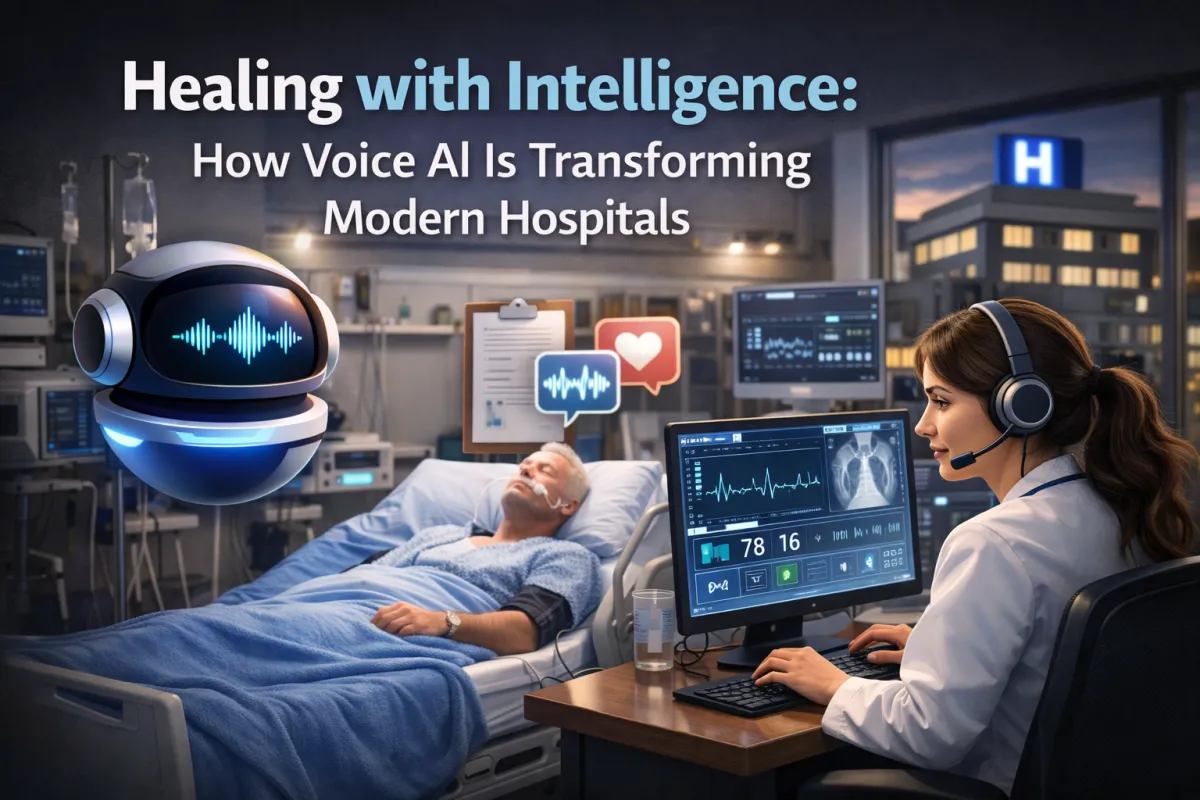
Healing with Intelligence: How Voice AI Is Transforming Modern Hospitals
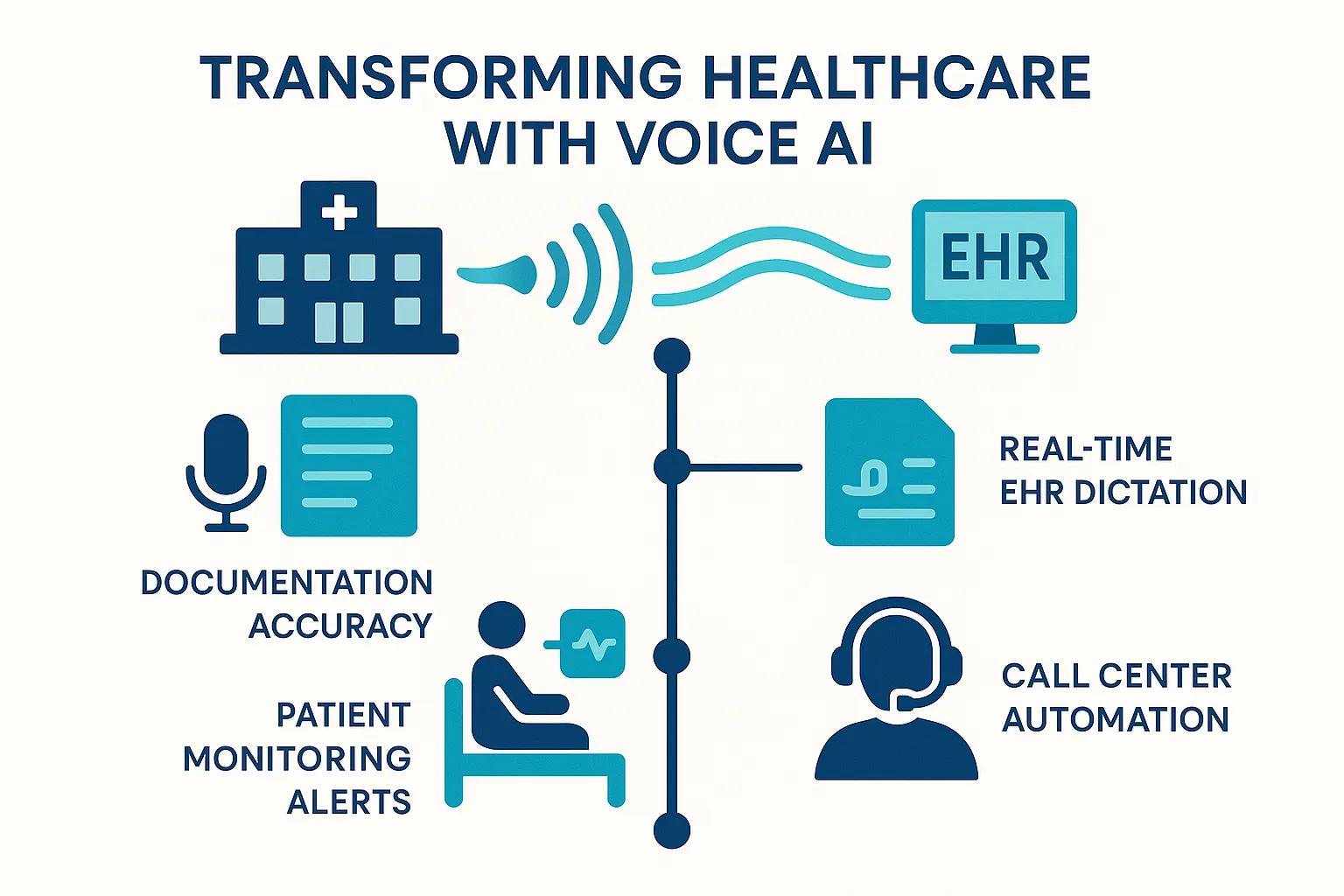
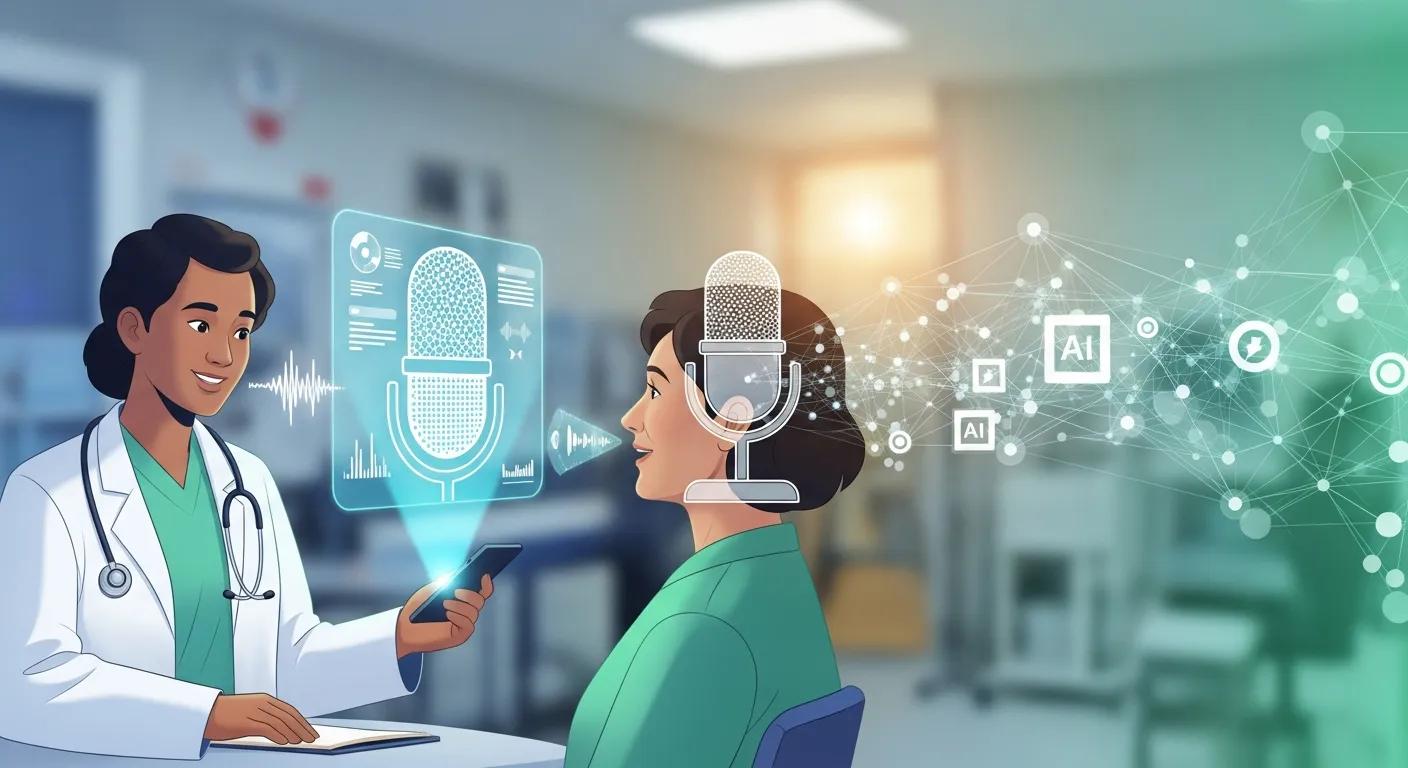
Voice AI technology is revolutionizing the healthcare sector by streamlining processes and improving patient care. This article explores how voice AI enhances clinical documentation accuracy, optimizes patient monitoring systems, and automates call center operations. As healthcare professionals face increasing demands, the integration of voice AI offers a solution to improve efficiency and reduce clinician burnout. The specific benefits of AI voice assistants, the role of natural language processing, and the security measures necessary for implementing these technologies in hospitals are examined. Additionally, emerging trends and future innovations in voice AI for healthcare are discussed.
How does Voice AI improve clinical documentation accuracy in healthcare?
Voice AI significantly enhances clinical documentation accuracy by automating the transcription process and reducing human error. By utilizing advanced speech recognition technology, healthcare providers can capture patient information more efficiently, leading to improved documentation quality. This technology not only saves time but also ensures that critical patient data is accurately recorded, which is essential for effective treatment and care.
Research further supports the transformative impact of AI speech recognition on clinical documentation.
AI Speech Recognition for Clinical Documentation: Accuracy & Efficiency Clinical documentation is vital for effective communication, legal accountability and the continuity of care in healthcare. Traditional documentation methods, such as manual transcription, are time-consuming, prone to errors and contribute to clinician burnout. AI-driven transcription systems utilizing automatic speech recognition (ASR) and natural language processing (NLP) aim to automate and enhance the accuracy and efficiency of clinical documentation. Evaluating the performance of artificial intelligence-based speech recognition for clinical documentation: a systematic review, KX Zhou, 2025
What are the benefits of AI voice assistants for medical documentation?
AI voice assistants offer several key benefits for medical documentation:
Increased Accuracy: Voice AI reduces manual entry errors, ensuring that patient records are precise and reliable.
Time Savings: Healthcare professionals can spend less time on documentation and more time on patient care, enhancing overall productivity.
Improved Workflow: By integrating voice AI into clinical workflows, healthcare providers can streamline processes and reduce administrative burdens.
These advantages highlight the transformative potential of voice AI in enhancing clinical documentation practices.
Further studies emphasize how AI-powered automation, including generative AI, significantly improves the accuracy and efficiency of nursing documentation.
Generative AI for Voice-Enabled Nursing Documentation AI-powered automation plays a role in the improvement of the accuracy, efficiency, and clinical utility of nursing documentation. Key applications include automatic clinical document generation, voice-enabled documentation, and intelligent systems for patient reporting and clinical decision support. Generative AI-Powered Automation of Nursing Documentation and Patient Reporting: Enhancing Accuracy, Efficiency, and Clinical Decision Support, N Kushwaha, 2026
How does speech recognition technology streamline clinical workflows?
Speech recognition technology plays a crucial role in streamlining clinical workflows by enabling real-time documentation. This technology allows healthcare providers to dictate notes directly into electronic health records (EHRs), which minimizes the need for manual data entry. As a result, clinicians can retrieve patient information faster and focus on delivering quality care. The integration of speech recognition not only enhances efficiency but also contributes to better patient outcomes by ensuring that healthcare providers have access to accurate and up-to-date information.
In what ways does Voice AI enhance patient monitoring systems in hospitals?
Voice AI enhances patient monitoring systems by facilitating real-time engagement and alerts. This technology allows healthcare providers to interact with patients more effectively, ensuring timely responses to their needs. By leveraging voice AI, hospitals can improve patient communication and engagement, which is vital for effective monitoring and care.
How does Voice AI support real-time patient engagement and alerts?
Voice AI supports real-time patient engagement by enabling healthcare providers to send immediate alerts and notifications. For instance, if a patient's condition changes, the system can automatically notify the healthcare team, allowing for prompt intervention. This capability not only enhances patient safety but also fosters a more responsive healthcare environment.
What role does natural language processing play in patient monitoring?
Natural language processing (NLP) is integral to patient monitoring systems as it allows for the interpretation of unstructured data from patient interactions. By analyzing voice inputs, NLP can extract meaningful insights and trends, helping healthcare providers make informed decisions. This technology enhances data interpretation and provides better patient insights, ultimately leading to improved care and outcomes.
How can Voice AI optimize inbound and outbound call center operations in healthcare?
Voice AI can significantly optimize inbound and outbound call center operations in healthcare by automating routine tasks and improving communication efficiency. This technology streamlines call handling processes, allowing healthcare organizations to manage patient inquiries more effectively.
Indeed, advanced generative AI and NLP systems are being developed to automate and enhance various aspects of healthcare call center operations.
Generative AI & NLP for Healthcare Call Center Automation A comprehensive novel generative AI (Gen-AI) system, integrated with custom-built sentiment analysis and transformer-based topic modeling components, automates call summarization and topic labeling using a large language model (LLM) and other transformer-based model architecture. The system enhances operations by converting call audio to text transcript, identifying call dispositions, generating structured summaries in a SOAP (Subjective, Objective, Assessment, Plan) format, using in-house custom LLM to classify calls as satisfied, neutral, or dissatisfied, and assigning thematic labels using the integrated transformer-based model. A Generative AI and NLP-Based Research Prototype for Call Resolutions and Automation: The Case of a Healthcare Contact Center, A Gupta, 2024
What are the advantages of healthcare voice automation for call centers?
Healthcare voice automation offers several advantages for call centers:
Increased Efficiency: Automated systems can handle a higher volume of calls, reducing wait times for patients.
Cost Savings: By minimizing the need for human operators for routine inquiries, healthcare organizations can reduce operational costs.
Enhanced Patient Experience: Voice AI can provide quick responses to patient questions, improving overall satisfaction.
These benefits demonstrate how voice automation can transform call center operations in healthcare settings.
How does Voice AI integrate with hospital call center workflows?
Integrating Voice AI into hospital call center workflows involves several strategies:
Seamless Integration: Voice AI systems can be integrated with existing call center software, ensuring a smooth transition and minimal disruption.
Training Requirements: Staff may need training to effectively utilize Voice AI tools, ensuring they can maximize the technology's potential.
Data Management: Voice AI can assist in managing patient data more efficiently, allowing for better tracking and follow-up on patient inquiries.
This integration not only enhances operational efficiency but also improves the overall patient experience.
What security and compliance measures are essential for Voice AI in healthcare?
Implementing Voice AI in healthcare requires stringent security and compliance measures to protect patient data and ensure regulatory adherence. As healthcare organizations adopt these technologies, they must prioritize data security to maintain patient trust and comply with regulations.
How does voice biometrics enhance patient authentication and data security?
Voice biometrics enhances patient authentication by using unique voice patterns to verify identity. This technology provides a secure method for accessing sensitive patient information, reducing the risk of unauthorized access. By implementing voice biometrics, healthcare organizations can improve data security while offering a user-friendly authentication process.
What are the regulatory considerations for deploying Voice AI in hospitals?
When deploying Voice AI in hospitals, organizations must consider several regulatory factors:
Compliance with HIPAA: Ensuring that voice AI systems adhere to the Health Insurance Portability and Accountability Act (HIPAA) is crucial for protecting patient privacy.
Data Protection Regulations: Organizations must comply with local and international data protection laws to safeguard patient information.
Regular Audits: Conducting regular audits of voice AI systems can help identify potential vulnerabilities and ensure ongoing compliance.
These regulatory considerations are essential for the successful implementation of Voice AI in healthcare settings.
What are the emerging trends and future innovations in healthcare Voice AI?
The landscape of Voice AI in healthcare is rapidly evolving, with emerging trends and innovations that promise to enhance patient care and operational efficiency. As technology advances, healthcare organizations must stay informed about these developments to remain competitive.
How is Voice AI reducing clinician burnout and improving communication efficiency?
Voice AI is reducing clinician burnout by automating repetitive tasks, allowing healthcare providers to focus on patient care. By streamlining documentation and communication processes, voice AI helps alleviate the administrative burden that often contributes to clinician stress. This technology fosters a more efficient workflow, enabling healthcare professionals to maintain a better work-life balance.
What new capabilities are expected in Voice AI for hospitals by 2026?
By 2026, several new capabilities are anticipated in Voice AI for hospitals:
Integration with Telehealth: Voice AI is expected to enhance telehealth services by facilitating remote patient interactions and consultations.
Advanced Analytics Capabilities: Future innovations may include advanced analytics that provide deeper insights into patient data, improving decision-making processes.
Personalized Patient Interactions: Voice AI may evolve to offer more personalized interactions based on individual patient needs and preferences.
These anticipated advancements highlight the potential of Voice AI to transform healthcare delivery in the coming years.
Frequently Asked Questions
How can hospitals and healthcare benefit from Voice AI?
Voice AI offers significant benefits to hospitals and healthcare providers by automating administrative tasks to combat severe burnout, enhancing patient experience through 24/7 accessibility, and reducing overwhelming operational costs. Through Natural Language Processing (NLP) and speech-to-text technologies, voice AI provides 24/7 support for routine inquiries, enables hands-free documentation for clinicians, and improves operational efficiency, often leading to reduced call volumes and lower costs.
What challenges do healthcare organizations face when implementing Voice AI?
Healthcare organizations may encounter several challenges when implementing Voice AI technologies. These include resistance to change from staff accustomed to traditional methods, the need for significant investment in technology and training, and concerns about data privacy and security. Additionally, integrating Voice AI with existing systems can be complex, requiring careful planning and execution. Organizations must also ensure that the technology complies with healthcare regulations, which can add another layer of complexity to the implementation process.
How can Voice AI improve patient engagement beyond monitoring?
Voice AI can enhance patient engagement by facilitating personalized communication and education. For instance, AI-driven voice assistants can provide patients with tailored health information, reminders for medication, and follow-up care instructions. This proactive approach encourages patients to take an active role in their health management. Furthermore, Voice AI can gather patient feedback through conversational interfaces, allowing healthcare providers to better understand patient needs and preferences, ultimately leading to improved satisfaction and adherence to treatment plans.
What role does Voice AI play in telehealth services?
Voice AI plays a significant role in telehealth services by enabling seamless communication between patients and healthcare providers. It can facilitate virtual consultations, allowing patients to interact with their doctors through voice commands. Additionally, Voice AI can assist in scheduling appointments, answering common questions, and providing pre-visit instructions. This technology enhances the telehealth experience by making it more accessible and user-friendly, ultimately improving patient satisfaction and engagement in their care.
How does Voice AI contribute to data analytics in healthcare?
Voice AI contributes to data analytics in healthcare by capturing and processing large volumes of unstructured data from patient interactions. By utilizing natural language processing, Voice AI can analyze voice inputs to extract valuable insights, trends, and patterns in patient behavior and outcomes. This data can inform clinical decision-making, improve patient care strategies, and enhance operational efficiency. As a result, healthcare organizations can leverage these insights to optimize their services and better meet patient needs.
What training is required for healthcare staff to use Voice AI effectively?
To use Voice AI effectively, healthcare staff typically require training that focuses on both the technical aspects of the technology and its practical applications in clinical settings. Training programs should cover how to operate the Voice AI systems, interpret the data generated, and integrate these tools into existing workflows. Additionally, staff should be educated on best practices for patient interaction and data privacy compliance. Ongoing support and refresher courses can also help ensure that staff remain proficient as the technology evolves.
What impact does Voice AI have on healthcare costs?
Voice AI can significantly impact healthcare costs by improving operational efficiency and reducing administrative burdens. By automating routine tasks such as documentation and patient inquiries, healthcare organizations can lower labor costs and minimize the risk of errors that lead to costly complications. Additionally, enhanced patient engagement and streamlined workflows can lead to better health outcomes, potentially reducing the need for expensive interventions. Overall, the implementation of Voice AI can result in long-term cost savings for healthcare providers.
Conclusion
Integrating Voice AI into healthcare transforms patient care by enhancing documentation accuracy, streamlining workflows, and improving patient engagement. These advancements not only alleviate clinician burnout but also foster a more efficient healthcare environment. By embracing these technologies, healthcare organizations can significantly enhance operational efficiency and patient satisfaction. Discover how Voice AI can revolutionize healthcare practices by exploring the services offered by ThePowerLabs.
