
How AI Automation can Simplify Operations?

Voice AI combines speech recognition, natural language understanding, and automated dialog to turn spoken interactions into measurable business results, faster response times, higher conversion, and smoother operations. This guide breaks down how voice automation works, the core technologies behind it, and the concrete operational gains enterprises see when they scale conversational AI. You’ll get a clear view of the stack: ASR, NLP, TTS, analytics & how those components map to real business processes, and which problems voice agents solve across support, sales, and operations. We also walk through a coordinated four‑bot orchestration model that ties lead generation, voice, chat, and smart operations to measurable outcomes and integration patterns. Along the way we cover implementation best practices, Responsible AI governance, and industry examples to help decision-makers assess voice AI for production. Practical checklists, entity-to-outcome mappings, and next steps round out the guide for teams planning enterprise voice automation.
What are voice AI solutions, and how do they improve business operations?
Voice AI systems convert spoken language into intent-driven actions by combining Automatic Speech Recognition (ASR), Natural Language Processing (NLP), dialog management, and Text-to-Speech (TTS). They transcribe audio, extract intents and entities, run business rules or API calls, and respond with synthesized speech or handoffs to people, reducing latency and increasing throughput. The result: faster resolutions, reliable 24/7 coverage, and personalized interactions that scale without a matching headcount increase. Voice agents are especially useful for call routing, automated qualification, appointment scheduling, and proactive outreach cases where voice-first interactions improve accessibility and completion rates. Understanding how the components fit together helps you choose the right architecture and integration approach for your enterprise.
What is voice AI and conversational AI in business contexts?
In a business setting, voice AI applies speech technologies; ASR, intent recognition, dialog management, and TTS- tied to business logic and backend systems. ASR turns audio into text, NLP pulls out intents and slots, dialog management handles multi-turn flows and API calls (for example, CRM lookups), and TTS delivers the spoken reply to close the loop. Unlike traditional rule-based IVR, this stack preserves context across turns, retains entities, and can orchestrate across channels. Practically, conversational AI powers lead qualification, transactional support, and guided troubleshooting scenarios where recalling prior context improves conversion and satisfaction.
How does voice AI improve customer engagement and support?
Voice AI raises engagement by providing immediate, context-aware responses that shorten wait times and boost first-contact resolution through automated routing and intent-driven self-service. By maintaining conversation state across turns and channels, voice agents personalize interactions using stored profiles and recent activity, which creates smoother handoffs and fewer repeat questions. Automation scales reliably during peaks and reduces the need for oversized agent teams, while transcripts and analytics supply continuous improvement signals for model tuning and quality assurance. With voice handling routine flows, human agents can focus on complex escalations, delivering a better overall experience while lowering operational friction. These operational wins naturally lead into strategic orchestration across voice and other AI capabilities.
If you’re exploring integrated approaches, we offer a coordinated Four‑Bot AI System that maps conversational AI to lead generation, voice interactions, chat, and internal operations: designed to show how automation drives measurable results. Contact our team to learn how these bots could work for your business.
How does The Power Labs’ Four‑Bot AI System streamline business processes?
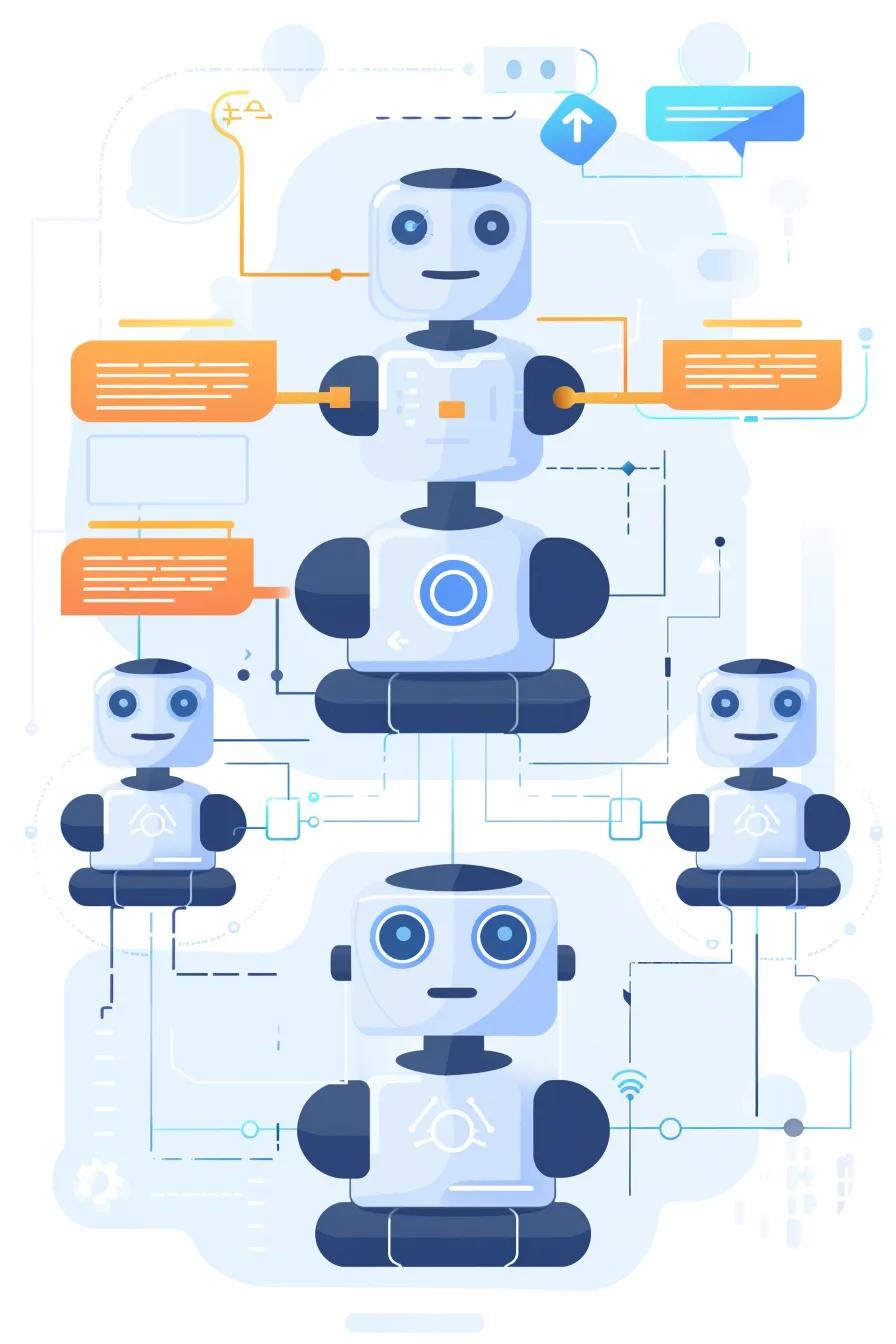
The Power Labs’ Four‑Bot AI System is an orchestrated suite that automates prospecting, voice conversations, omnichannel messaging, and internal tasks so automation delivers end‑to‑end efficiency without fragmenting data. At a system level, the bots share context via unified profiles and analytics: leads captured by the lead‑gen bot get validated and engaged by the voice bot, escalated to sales when needed, or nurtured by chat; while the smart operations bot handles downstream work like ticketing and enrichment. That orchestration reduces manual handoffs, speeds time‑to‑contact, and enforces consistent business logic across customer journeys. The design emphasizes CRM and reporting integrations so gains are visible to decision-makers and traceable to specific KPIs. If you want a walkthrough, we’ll show how this architecture maps to your metrics and systems.
What are the roles of the AI Lead Generation Bot and AI Voice Bot?
The AI Lead Generation Bot automates prospect discovery, enrichment, and qualification by monitoring inbound signals, initiating outreach, and writing structured lead records to your CRM. It uses intent detection and enrichment APIs to capture attributes, segment prospects, and trigger sequences that increase contact velocity and lead volume without extra SDR headcount. The AI Voice Bot then conducts voice-first conversations to qualify intent, answer routine questions, and book follow-ups, handing high-value leads to humans with context-rich summaries and suggested next steps. This split of responsibilities delivers 24/7 prospecting with instant qualification so sales teams receive warmer, better-documented handoffs that lift conversion rates.
How do the AI Chat Bot and AI Smart Operations Bot improve efficiency?
The AI Chat Bot offers omnichannel messaging: web, mobile, in‑app, while keeping the same conversational state and customer profile used by voice agents, enabling smooth transfers and consistent answers across channels. It handles routine queries, surface resources, and escalates to people or voice when needed. The AI Smart Operations Bot automates internal workflows: ticket routing, data entry, scheduled reports by calling APIs, updating CRM records, and triggering downstream automations based on conversation outcomes. Together, these bots cut administrative work, reduce processing errors, and free employees for higher‑value tasks, delivering measurable time savings and fewer operational bottlenecks.
Below is a compact mapping that shows each bot, its core responsibility, and the business result it drives.
Primary Function: Discover, enrich, and pre‑qualify prospects
Business Outcome: Increased lead volume and higher lead quality
Bot: AI Voice Bot
Primary Function: Run inbound/outbound voice conversations and qualification
Business Outcome: Faster contact times and improved conversion
Bot: AI Chat Bot
Primary Function: Deliver omnichannel messaging and self‑service
Business Outcome: Continuous coverage and reduced live‑agent load
Primary Function: Automate ticketing, data entry, and workflow orchestration
Business Outcome : Fewer manual tasks and faster internal processing
This mapping highlights how each bot fits into a cohesive automation stack and helps teams prioritize deployment phases to maximize ROI.
What are the key benefits of AI automation for enterprises?

AI automation delivers measurable operational gains by removing repetitive tasks, increasing throughput, and improving customer outcomes through always-on availability and contextual intelligence. Organizations that deploy voice AI and a coordinated bot ecosystem typically see steadier lead capture, shorter handling times, and better routing of high‑value interactions to skilled staff. Around‑the‑clock coverage, automated enrichment, and stateful handoffs reduce manual touchpoints and let employees focus on higher‑value work, accelerating time‑to‑value for automation programs. For leaders, the benefits show up as productivity improvements, captured revenue from higher conversions, and lower long‑term operating costs.
How does AI automation reduce manual tasks and increase productivity?
AI automation takes over repetitive activities: call qualification, data entry, ticket routing and replaces them with event‑driven automations and API updates. That reduces redundant work and shortens process cycles, freeing teams to focus on exceptions and strategy instead of high‑volume transaction handling. In practice, staff are redeployed to sales conversations, retention efforts, and continuous improvement areas that drive revenue and customer loyalty. Operational dashboards and transcripts feed analytics that surface more automation opportunities, creating a cycle of incremental productivity gains and better outcomes.
What ROI and business transformation can companies expect?
ROI from voice AI and bot orchestration usually appears as cost avoidance (fewer manual hours) plus revenue uplift (better lead conversion and faster follow‑up). Timelines depend on complexity, but many organizations report initial cost and efficiency gains within months after a focused pilot that integrates bots with CRM and reporting. Transformation examples include shifting low‑value manual volume to automated qualification, reducing time‑to‑contact for sales opportunities, and lowering average handling time for support. Decision‑makers should model both hard savings (reduced FTE hours) and soft gains (higher CSAT and faster revenue velocity) to estimate payback.
How can voice AI solutions be integrated into existing business systems?
Integrating voice AI starts with clear data contracts, defined API patterns, and pilot‑driven rollouts that protect production systems while proving business outcomes. Typical integration targets are CRM, ticketing platforms, analytics pipelines, and identity providers; methods range from REST APIs and webhooks to middleware and messaging queues for reliable delivery. Security and privacy must be baked in from day one: scoped access, encryption in transit and at rest, and clear retention policies for recordings and transcripts. A phased approach: pilot, measure, iterate, scale- reduces risk and ensures automations align with operational KPIs and governance needs.
What are the best practices for seamless AI bot integration?
Begin by mapping data flows and defining contracts for entities like customer profiles, transcripts, and lead records to avoid mismatches during handoffs. Run a security and privacy review up front, then pilot a small workflow to validate mappings, handoff logic, and KPIs; use human‑in‑the‑loop controls to catch edge cases early. Monitor metrics continuously: error rates, fallback rates, escalation volumes and iterate on NLU and dialog policies using real transcripts. Ensure logging, observability, and rollback plans are in place so integration failures can be isolated without harming customer experience. These practices de‑risk deployments and create a repeatable blueprint for scaling across business units.
How does Responsible AI ensure ethical and secure automation?
Responsible AI practices make voice and conversational systems transparent, secure, and human‑supervised to reduce bias and protect data. Key controls include logging decision points, monitoring for model drift and bias, clear privacy notices about call recordings, and escalation paths that route sensitive interactions to people. Governance also means auditing training data, restricting transcript access by role, and documenting retention policies that meet regulations and corporate standards. Building these controls into integration and piloting prevents common pitfalls and helps earn trust from customers and stakeholders.
What industry-specific use cases demonstrate the power of voice AI?
Voice AI has strong impact where spoken access and quick resolution matter: healthcare appointment flows, retail order and returns support, and supply chain exception handling, for example. In each case, voice agents automate routine work while preserving data integrity and compliance controls, letting human staff focus on cases that need judgment and expertise. Use cases typically start with a single workflow: appointment scheduling or order status and expand by integrating with EMR, ERP, or CRM and adding analytics to measure outcomes. Concrete narratives help stakeholders visualize end‑to‑end orchestration and set measurable KPIs for pilots.
How is voice AI transforming customer service in healthcare and retail?
In healthcare, voice AI supports appointment booking, patient triage, and follow‑up reminders while enforcing privacy controls and retention policies. Voice agents can pre‑screen common symptoms, escalate urgent cases to clinicians, and populate electronic records with structured data: lightening administrative load. In retail, voice automation handles order status checks, return starts, and basic product questions, integrating with order management systems so customers get real‑time, context‑aware answers. Both industries benefit from consistent service levels, faster resolution, and reduced pressure on human teams, provided compliance and data governance are part of the deployment plan. These examples naturally extend to supply chain and internal operations use cases.
How does AI automation optimize supply chains and internal operations?
Voice AI improves supply chain resilience by automating exception reporting, triggering reorders, and notifying stakeholders via voice or chat when thresholds are hit. Integrated with forecasting and inventory systems, voice and smart operations bots can surface predictive alerts to planners and autonomously create tickets or purchase requests for routine exceptions. Internally, bots automate approvals, scheduling, and status updates, cutting email back‑and‑forth and manual entry. These automations shorten cycle times, reduce fulfillment errors, and clarify exception handling collectively lowering operational costs and increasing throughput.
What are common questions about voice AI solutions for business?
Prospective buyers typically ask about performance, integration complexity, ROI timelines, and how voice and chat keep state across channels critical evaluation points when selecting a vendor or building in‑house. Direct answers help procurement and technical teams screen fit quickly and highlight areas needing deeper validation, such as security, model retraining, and escalation workflows. This section addresses operational concerns and explains how orchestration, monitoring, and governance lower adoption risk.
How does AI voice improve customer experience in call centers?
AI voice improves call center experience by automating triage, accurately recognizing intent to route calls, and offering agent‑assist tools that surface relevant context during live interactions. Transcription and sentiment signals help supervisors spot trends and coach agents proactively—improving quality and satisfaction. When tied to CRM and knowledge bases, voice agents speed resolution by answering common questions or escalating with a concise summary, lowering average handle time and repeat contacts. These capabilities let operations focus more on outcome quality and continuous improvement through data‑driven insights.
Can AI voice and chat bots work together for omnichannel support?
Yes, voice and chat bots can share session state and unified customer profiles to enable seamless handoffs so a conversation started on voice can continue in chat without losing context. That requires a shared session identifier, centralized profile storage, and aligned intent models so the system recognizes prior interactions regardless of channel. The result: less friction for customers, fewer repeated verification steps, faster resolution, and higher satisfaction. Technical teams should validate state transfer in pilots and ensure privacy controls and logging remain intact across channels.
Below are practical steps enterprise teams should follow when evaluating voice AI vendors and planning pilots; they help prioritize scope and measure success.
Define clear KPIs: Set baseline metrics first‑contact resolution, time‑to‑contact, qualified leads per month before you pilot.
Start with a narrow pilot: Focus on one high‑value workflow to validate integration and outcomes quickly.
Ensure data contracts: Map fields and retention policies between bots and backends to prevent mismatches.
Plan human‑in‑the‑loop: Keep escalation paths and quality checks during early deployment to handle edge cases.
These steps create a repeatable approach to pilot, measure, iterate, and scale voice AI, reducing risk and demonstrating early value to stakeholders.
If you’re ready to explore next steps, our team can help scope a pilot and estimate outcomes for your environment.
Frequently Asked Questions
What types of businesses can benefit from voice AI solutions?
Voice AI helps many industries: healthcare, retail, finance, and customer service among them. Any business that relies on efficient spoken interactions: appointment booking, order management, or support can use voice AI to boost operational efficiency. By automating common tasks and delivering instant responses, organizations improve customer satisfaction and reduce costs. High‑call‑volume or complex‑workflow sectors often see the fastest returns.
How can organizations measure the success of voice AI implementations?
Measure success with KPIs like first‑contact resolution, average handling time, and customer satisfaction scores. Track lead conversion and operational efficiency gains to evaluate business impact. Regularly review transcripts and feedback to surface improvement opportunities. Start with a baseline so post‑deployment changes are clear and actionable.
What are the potential challenges when implementing solutions?
Common challenges include integration complexity with legacy systems, ensuring data privacy and security, and managing expectations. Accurately training models to handle diverse accents and dialects can affect performance, and change management is essential as teams adapt to new workflows. Careful planning, pilot testing, and ongoing support help smooth the transition and improve outcomes.
How does AI reduce operational costs?
AI can also help create failure mode and effect analysis (FMEA) models more efficiently, reducing the time and effort required to develop these studies. As a result, companies can schedule maintenance proactively to minimize downtime, extend assets' lifespan and reduce operational costs.
How does voice AI handle multiple languages and dialects?
Voice AI can support multiple languages and dialects by training models on diverse datasets that reflect real linguistic variety. Evaluate your customer base’s language needs and confirm the chosen solution supports those languages. Continuous retraining and updates will improve recognition and response quality over time.
What role does analytics play in optimizing voice AI performance?
Analytics are central to optimization: they reveal patterns in interactions, highlight efficiency gaps, and guide model and dialog updates. Analyzing transcripts, sentiment, and operational metrics helps refine responses and workflows. Ongoing monitoring ensures the system keeps pace with customer needs and maximizes ROI.
How can businesses ensure compliance with regulations when using voice AI?
Compliance requires solid data governance: clear privacy notices, secure storage, user consent, and documented retention policies. Regular audits and involvement from legal and compliance teams help align deployments with regulations like GDPR or HIPAA. Role‑based access to transcripts and strict controls around recordings further reduce risk.
Conclusion
Voice AI can meaningfully improve operational efficiency by automating routine tasks and delivering better customer interactions across industries. Leveraging ASR, NLP, and integrated automation lets businesses respond faster, convert more leads, and lower operational costs while providing context‑aware experiences that increase customer satisfaction. If you want to explore how voice AI could transform your workflows, contact us and we’ll outline practical next steps tailored to your needs.
