
Redefining Hospitality: How Voice AI Turns Stays into Experiences
Elevate Service with Voice AI
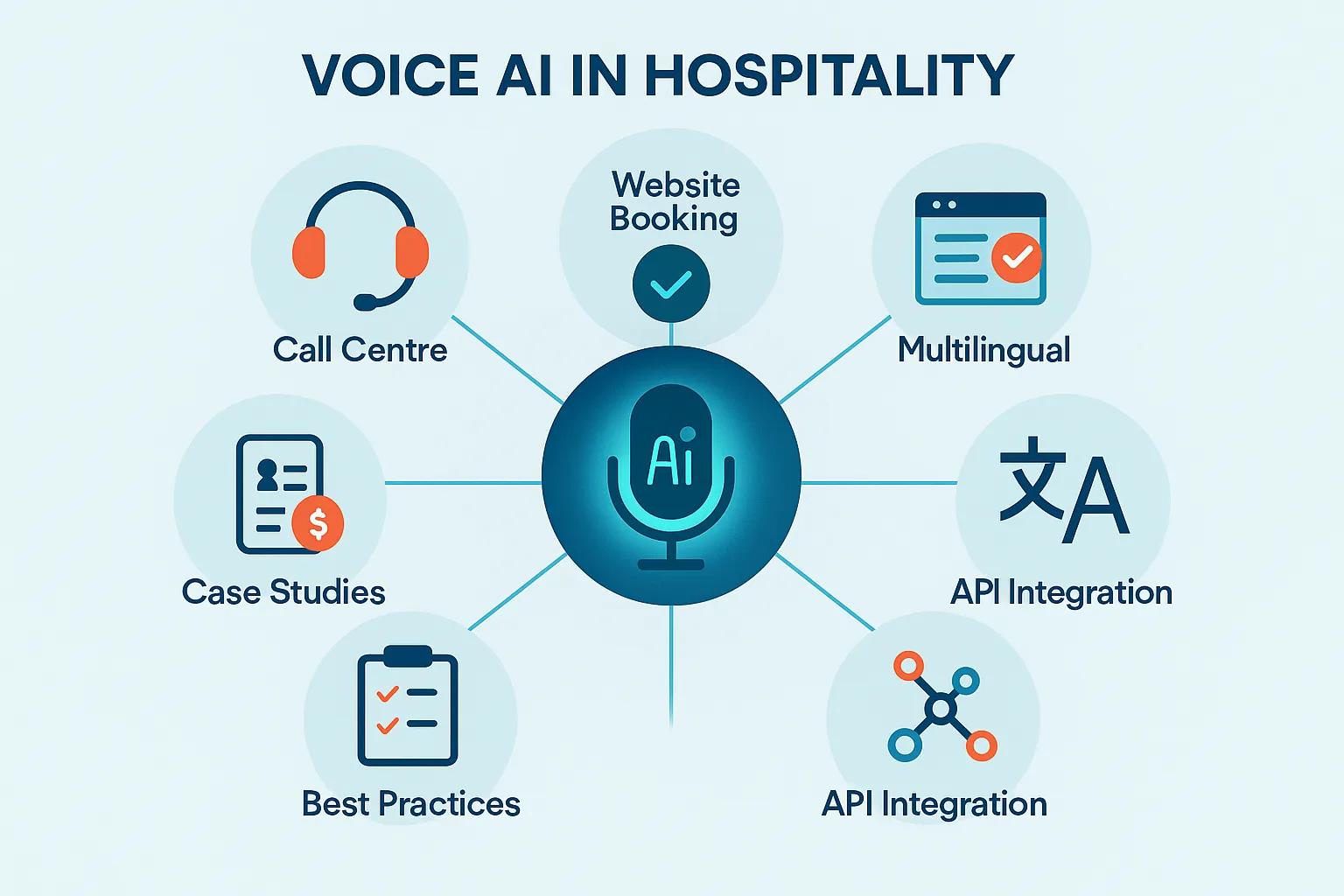
In the hospitality industry, the integration of voice AI technology is revolutionizing customer service by streamlining communication and enhancing guest experiences. Voice AI, particularly through AI voice assistants, offers hotels a powerful tool to manage both inbound and outbound calls, as well as improve website interactions. This article will explore how voice AI improves hotel call centers, the advantages of integrating voice AI on hotel websites, and the technical aspects of its implementation. Additionally, we will discuss real-world case studies demonstrating the return on investment (ROI) of voice AI in hotels, including its capabilities for multilingual interactions.
Indeed, research consistently highlights the significant advantages of integrating voice AI in hospitality for both guests and hotels.
Voice AI for Hotel Guest Experience & Workflow Automation Voice-based artificial intelligence (AI) devices transform human-computer bidirectional interactions with new touchpoints. Despite the recent release of purpose-developed in-room voice assistants for hotels, they have not been widely deployed by hospitality companies. There is limited research on the phenomenon of voice-based digital assistants and a research gap in their adoption by hotels for automating workflows and enhancing guests’ experiences. This study analyzed the role of voice devices for mediating interactions between hotels and guests from both the hospitality technology providers’ and guests’ perspectives. The findings revealed that benefits associated with the application of voice-based digital assistants in hospitality outweigh the drawbacks for both hotels and guests. In-room voice-based AI digital assistants transforming on-site hotel services and guests' experiences, D Buhalis, 2021
The following sections will delve into the key features and benefits of voice AI, providing insights into how this technology can transform hotel operations and customer engagement.
How Does Voice AI Improve Hotel Inbound and Outbound Call Centers?
Voice AI enhances hotel call centers by automating processes and improving efficiency. By utilizing AI voice assistants, hotels can streamline call handling, reduce wait times, and provide consistent service. This technology works by employing natural language processing (NLP) to understand and respond to guest inquiries, allowing for a more efficient resolution of issues. The result is a significant improvement in guest satisfaction and operational efficiency.
Further research emphasizes the critical role of AI voice bots in optimizing call center operations and improving performance control.
AI Voice Bots for Call Center Operations of exactly AI based technologies in enhancing call center operations and CSRs performance control. Kim H. [5] in his paper analyses the use of AI Voice Bot in Call centers in Korean From Data to Decisions: Integrating Speech Analytics and Machine Learning in Call Centers using AI tools., 2025
Key Features of AI Voice Assistants for Hotel Call Center Automation
AI voice assistants come equipped with several key features that enhance hotel call center operations:
Automated Call Routing: AI systems can intelligently route calls to the appropriate department or personnel, minimizing wait times and ensuring guests receive timely assistance.
24/7 Availability: Voice AI can operate around the clock, providing guests with immediate responses to their inquiries, regardless of the time of day.
Natural Language Processing Capabilities: Advanced NLP allows AI voice assistants to understand and interpret guest requests accurately, leading to more effective communication.
These features collectively contribute to a more efficient call center environment, enabling staff to focus on more complex tasks while AI handles routine inquiries.
Benefits of AI in Reducing Call Center Costs and Enhancing Guest Satisfaction
The implementation of voice AI in hotel call centers offers numerous benefits, particularly in cost reduction and guest satisfaction:
Cost Savings: By automating routine inquiries, hotels can reduce staffing costs and allocate resources more effectively. Studies show that hotels can save up to 30% on operational costs by integrating AI solutions.
Improved Guest Feedback Scores: With faster response times and accurate information, guest satisfaction scores often see a significant increase, leading to better reviews and repeat business.
Enhanced Operational Efficiency: AI can handle a high volume of calls simultaneously, reducing the burden on human agents and improving overall service levels.
These advantages highlight the transformative potential of voice AI in enhancing hotel call center operations.
These findings are consistent with broader studies that detail the extensive benefits of voice AI, including enhanced operational efficiency and superior customer experiences.
Benefits of Voice AI: Efficiency & Customer Experience Enhanced operational efficiency, improved customer experience, automated updates, operational and efficiency gains and reduced energy consumption are the key benefits explained. Voice assistants in hospitality: using artificial intelligence for customer service, D Buhalis, 2022
What Are the Advantages of Integrating Voice AI on Hotel Websites?
Integrating voice AI on hotel websites provides several advantages that enhance the overall guest experience. By leveraging voice recognition technology, hotels can automate guest communication and streamline booking processes, making it easier for potential guests to interact with the hotel.
Automated Guest Communication and Booking Handling via Voice Recognition Technology
Voice recognition technology allows hotels to automate various aspects of guest communication, including:
Instant Booking Confirmation: Guests can make reservations and receive immediate confirmation through voice commands, simplifying the booking process.
Personalized Recommendations: AI can analyze guest preferences and provide tailored suggestions, enhancing the overall user experience.
Efficient Inquiry Handling: Guests can ask questions and receive answers in real-time, improving engagement and satisfaction.
These capabilities not only enhance the user experience but also reduce the workload on hotel staff.
Enhancing 24/7 Customer Engagement with AI Virtual Assistants
AI virtual assistants play a crucial role in maintaining customer engagement around the clock. The benefits include:
Continuous Availability: Guests can access assistance at any time, ensuring their needs are met without delay.
Increased Interaction Rates: With AI handling inquiries, hotels can engage with more guests simultaneously, leading to higher conversion rates.
Consistent Messaging: AI ensures that all communications are consistent and aligned with the hotel's branding, enhancing the overall guest experience.
The integration of AI virtual assistants thus significantly boosts customer engagement and satisfaction.
How Does Voice AI Integrate with Hotel Management Systems?
Integrating voice AI with existing hotel management systems is essential for seamless operations. This integration allows for the efficient flow of information between systems, enhancing overall functionality.
Technical Aspects of AI Integration for Seamless Hotel Operations
The technical integration of voice AI involves several key components:
API Connectivity: Voice AI systems must connect with hotel management software through APIs, allowing for real-time data exchange.
Data Security Protocols: Ensuring that guest data is protected during interactions is critical, necessitating robust security measures.
User-Friendly Interfaces: The integration should provide intuitive interfaces for both staff and guests, facilitating ease of use.
These technical aspects are vital for ensuring that voice AI operates effectively within the hotel’s existing infrastructure.
Best Practices for Implementing Voice AI in Hospitality Technology Stacks
To successfully implement voice AI, hotels should consider the following best practices:
Conduct Thorough Needs Assessments: Understanding specific operational needs will guide the selection of appropriate AI solutions.
Pilot Testing: Implementing a pilot program can help identify potential issues before full-scale deployment.
Continuous Training and Support: Providing ongoing training for staff ensures they can effectively utilize AI tools and address any challenges that arise.
By following these best practices, hotels can maximize the benefits of voice AI integration.
What Are Real-World Case Studies and ROI of Voice AI in Hotels?
Examining real-world case studies provides valuable insights into the effectiveness of voice AI in hotel operations. These examples illustrate the tangible benefits that hotels can achieve through AI integration.
Examples of AI Voice Assistant Success in Hotel Inbound and Outbound Call Centers
Several hotels have successfully implemented voice AI, resulting in significant improvements:
Hotel A: After integrating voice AI, Hotel A reported a 40% reduction in call handling times and a 25% increase in guest satisfaction scores.
Hotel B: By automating routine inquiries, Hotel B saved approximately $100,000 annually in staffing costs.
Hotel C: The implementation of AI led to a 50% increase in booking conversions through their website.
These case studies demonstrate the potential for voice AI to enhance operational efficiency and guest satisfaction.
Measuring Cost Savings and Guest Satisfaction Improvements
Quantifying the benefits of voice AI is essential for understanding its impact:
Cost Savings: Hotels that adopt voice AI can expect to see a return on investment within the first year, with many reporting savings of up to 30%.
Guest Satisfaction Metrics: Surveys indicate that hotels using voice AI experience a significant increase in positive guest feedback.
Operational Efficiency: The ability to handle more calls simultaneously leads to improved service levels and reduced wait times.
These metrics underscore the value of voice AI in enhancing hotel operations.
Can Voice AI Handle Multilingual Guest Interactions in Hotels?
Voice AI technology is increasingly capable of handling multilingual interactions, making it an invaluable tool for hotels catering to diverse clientele.
Capabilities of AI Voice Recognition Technology for Multilingual Support
AI voice recognition technology can support multiple languages, allowing hotels to serve a broader range of guests. Key capabilities include:
Language Detection: AI can automatically detect the language spoken by the guest, providing responses in the appropriate language.
Cultural Nuances: Advanced AI systems can understand and respond to cultural nuances, enhancing communication effectiveness.
Real-Time Translation: Some AI systems offer real-time translation services, facilitating seamless interactions between guests and staff.
These capabilities significantly enhance the guest experience for international visitors.
Enhancing Global Guest Experience with Multilingual AI Virtual Assistants
Multilingual AI virtual assistants contribute to a more inclusive environment for guests. Benefits include:
Improved Accessibility: Guests can communicate in their preferred language, making interactions more comfortable and effective.
Increased Guest Loyalty: Providing personalized service in multiple languages fosters loyalty among international guests.
Broader Market Reach: Hotels can attract a more diverse clientele by offering services in various languages.
The ability to cater to multilingual guests is a significant advantage for hotels in today’s global market.
Frequently Asked Questions
How can AI be used in hotels?
Many hotels use AI-driven virtual concierges and chatbots to enhance guest engagement. Streamlining operations: AI automates routine tasks like check-ins, housekeeping schedules, and room service requests, freeing up staff to focus on guest-centric services.
What types of voice AI technologies are available for hotels?
Hotels can choose from various voice AI technologies, including in-room voice assistants, AI chatbots for websites, and automated call handling systems. In-room assistants can provide guests with information and services directly from their rooms, while chatbots can engage with potential customers online. Additionally, AI voice systems can streamline call center operations by managing inquiries and routingcalls efficiently. Each technology offers unique features tailored to enhance guest experiences and operational efficiency.
How can hotels ensure data security when using voice AI?
Data security is paramount when implementing voice AI in hotels. To ensure guest data protection, hotels should adopt robust security protocols, including encryption of data during transmission and storage. Regular security audits and compliance with data protection regulations, such as GDPR, are essential. Additionally, staff training on data privacy practices can help mitigate risks. By prioritizing security, hotels can build trust with guests while leveraging the benefits of voice AI technology.
What challenges might hotels face when implementing voice AI?
While voice AI offers numerous benefits, hotels may encounter challenges during implementation. These can include resistance from staff who may be hesitant to adopt new technology, integration issues with existing systems, and the need for ongoing maintenance and updates. Additionally, ensuring that the AI understands diverse accents and languages can be a technical hurdle. Addressing these challenges through thorough training, pilot programs, and continuous support can facilitate a smoother transition to voice AI.
How does voice AI impact staff roles in hotels?
The integration of voice AI in hotels can significantly impact staff roles by automating routine tasks, allowing employees to focus on more complex and personalized guest interactions. While some positions may see a reduction in demand for basic inquiry handling, new roles may emerge in AI management, data analysis, and customer experience enhancement. Staff training will be essential to equip employees with the skills needed to work alongside AI technologies effectively.
Can voice AI improve marketing efforts for hotels?
Yes, voice AI can enhance marketing efforts for hotels by providing personalized guest interactions and insights into customer preferences. By analyzing data from voice interactions, hotels can tailor marketing campaigns to target specific demographics and improve engagement. Additionally, voice AI can facilitate seamless booking processes and encourage repeat business through personalized recommendations, ultimately driving higher conversion rates and customer loyalty.
What is the future of voice AI in the hospitality industry?
The future of voice AI in the hospitality industry looks promising, with advancements in natural language processing and machine learning expected to enhance capabilities further. As technology evolves, hotels may see more sophisticated AI systems that can handle complex inquiries, provide personalized experiences, and integrate seamlessly with other smart technologies. The growing demand for contactless services and enhanced guest experiences will likely drive further adoption of voice AI solutions in the coming years.
Conclusion
Integrating voice AI technology in hotels significantly enhances operational efficiency and guest satisfaction, streamlining communication and automating routine tasks. By leveraging AI voice assistants, hotels can provide 24/7 support, reduce costs, and improve the overall guest experience. The value of this technology is evident in real-world case studies showcasing substantial ROI and increased guest loyalty. Discover how voice AI can transform your hotel operations by exploring our comprehensive solutions today!
